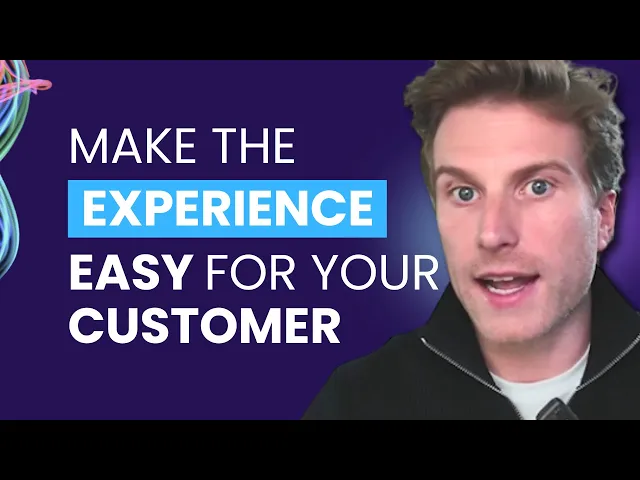
To Scale: Focus on Your Customer Needs | Mike Pyne
In this episode, Founder/CEO Mike Pyne, Medoh Health shares how he turned short-form video + AI into a doctor-specific knowledge platform that saves hours of repetitive patient Q&A.
We cover testing in the clinic (not just the cloud), communicating by text vs. QR, when to hire (and not hire) sales, and the founder mindset for speed without sacrificing quality.
What happens when you mix short-form video, a pile of patient questions, and a founder obsessed with real-world feedback?
Mike Pyne, Founder & CEO of Medoh Health, walks us through his journey from medtech sales and marketing at Smith+Nephew to building a platform that digitizes a doctor’s knowledge and delivers it to patients 24/7.
After three earlier attempts (content blog, clinical-trial finder, TikTok-style Q&A), Mike kept hearing the same thing in clinics: doctors repeat themselves all day and patients still leave with uncertainty. The winning combo: doctor-specific short videos plus AI that answers only from the doctor’s own content and documents.
We dig into building in the clinic, not just in the cloud: direct patient interviews, text-first delivery (ditch the QR friction), and shipping fast while staying safe — test, verify, fix.
Mike shares the hiring calculus (why you shouldn’t add sales until PMF), how to delegate without losing speed, and how the phrase “TikTok for medical info” unlocked stakeholder understanding. If you’re a founder in healthtech or any regulated space, this is a masterclass in iterative learning and pragmatic velocity.
Three Practical Pro Tips
Design for the moment your customer stops paying attention
One thing that shows up between the lines of Mike’s story is this uncomfortable truth: momentum stalls because life moves on. Patients forget. Clinicians get pulled into the next room. Founders assume adoption happens just because something is valuable. It doesn’t.
As a founder, your real design challenge is what happens after the conversation ends. The minute the Zoom call closes, the clinic visit ends, or the demo wraps, attention drops off a cliff. The teams that win plan explicitly for that drop. They map the “uh-oh” moments that show up days or weeks later and build simple nudges, reminders, or guardrails that meet users where they already are. If your product only works when people are focused, it won’t survive contact with reality.
Separate “people like it” from “people will actually use it”
Founders get great at collecting positive feedback. “This is awesome.” “I’d totally use this.” “This would save us so much time.” And then… nothing changes. No behavior shift. No habit formation. No adoption.
They miss the mark because they’re confusing agreement with integration. The hard work lives in understanding how something fits into a real workflow, not an ideal one. Who remembers to trigger it? Who owns it when the founder isn’t around? What happens on the busiest, messiest day?
The smartest teams I see run two parallel tracks early: one focused on value (does this actually help?) and another focused on friction (does this survive the chaos of daily work?). That’s where outside perspective, facilitated workshops, or brutal diagnostic sessions earn their keep: by stress-testing reality before reality does it for you.
Treat distribution as a trust decision, not a tech decision
Mike’s QR-code lesson is a classic founder trap: building something logical instead of something human. People adopt tools because they arrive through channels they already trust. No one actually cares about elegance.
As a founder, it’s worth stepping back and asking: Where does trust already live in this ecosystem? Text messages. Calendar invites. Existing workflows. Familiar formats. If adoption requires users to learn a new behavior and trust a new channel at the same time, you’ve doubled the risk.
Follow Bill: / founderandcdo
Contact Bill: https://meshagency.com/lets-connect/
Video Podcast: / @billschickfcmo
Audio Podcast: https://www.buzzsprout.com/2380430
Follow Mike: / michael-d-pyne