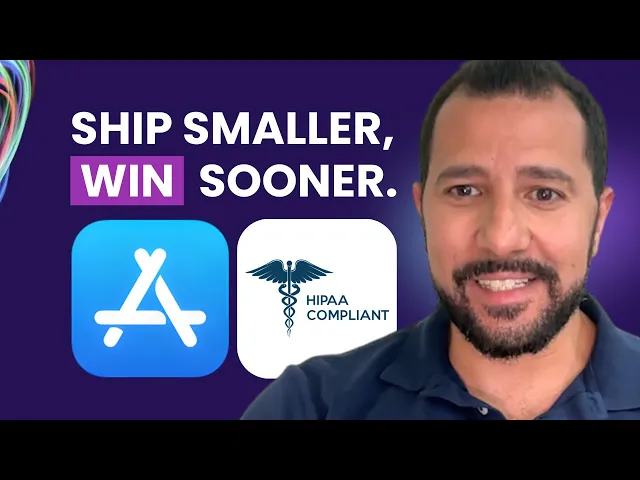
How to Launch a Successful Healthcare App | Peter Attia
Peter Attia, a software engineer with a data/analytics background, built Family Vitals, an iOS app that lets families securely store, organize, and collaborate on medical records, notes, images, and lab reports—while pulling data via Apple Health from thousands of clinics and hospitals. He explains why he chose iOS first (security posture, cost, infrastructure leverage), how AI sped up 30–40% of the busywork (but not the architecture), and why scoping ruthlessly was the only way to ship.
We dig into market validation (conversations + survey with the “sandwich generation”), navigating a multi-month App Store review for medical data, and the choice to use the platform’s rails rather than roll his own HIPAA-heavy backend. Peter shares what he’d change—start lead collection months earlier and partner on branding/positioning sooner—and leaves builders with a clear mantra: validate early, document security, and stack your work so launch momentum isn’t an accident.
3 Founder Moves Peter Used to Ship Faster
Tip 1 — Validate before you code (and build a waitlist):
Run 15–25 quick interviews with your target “family manager” persona + a lightweight 4–6 question survey to size the pain and test willingness to pay. Stand up a 1-page teaser + email capture and drive $10–$20/day traffic for two weeks. Green-light if you see ≥50–60% positive intent, ≥20% signup rate, and clear top-5 “must-have” features. Parking-lot the rest for later.
Tip 2 — Ruthless scope via platform leverage:
Pick ONE platform that removes risk. For health data, iOS first can unlock HealthKit/Apple Health connectivity, native security rails, and faster build loops. Design your MVP around the smallest end-to-end journey (e.g., import record → add note → share with family) and trim anything that slows App Review. Maintain a visible “cut list,” prioritize by (User Value ÷ Build Time), and use AI to accelerate boilerplate—but never to make core architecture decisions.
Tip 3 — Security-first from Day 0 (document everything):
Assume regulators, platforms, and partners will ask “how do you protect PHI?” Create a living security pack: data-flow diagram, storage decisions (avoid holding what you don’t need), access controls, audit trails, breach response, and privacy policy. Align features to what platforms will approve now (text-only chat before advanced agents, etc.). This prep shortens review cycles and builds user trust you can market—screenshots of your security posture, not just UI.
Follow Bill: / founderandcdo
Contact Bill: https://meshagency.com/lets-connect/
Video Podcast: / @billschickfcmo
Audio Podcast: https://www.buzzsprout.com/2380430
Follow Peter: / peter-attia